
Aussie Icon Pins

Our pins stylise some of the well known icons of Australia, a country rich in flora, fauna and interesting locations.

The pins are sculptured from silver plated pewter that has been oxidised and buffed to obtain a contemporary, antique look.

We also have matching earrings for a majority of these pins.


hatpin

20% of proceeds from the Tasmanian devil pin will go to the above program

hatpin


Pewter Pins

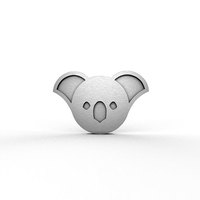
Icon Pins Koala

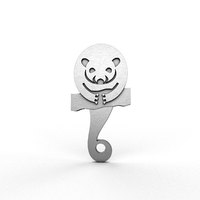
Koala

Found in coastal regions of eastern and southern Australia. The Koala is one of the few mammals that has fingerprints very similar to humans.

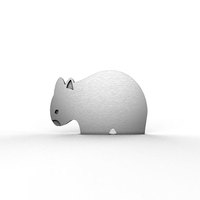
Icon Pins Wombat

Wombat

Australian marsupial found in forested, mountainous, and heathland areas of south-eastern Australia and Tasmania. They have an extraordinarily slow metabolism, taking around 14 days to complete digestion.

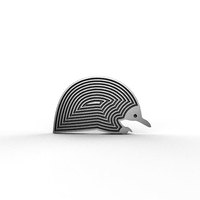
Icon Pins Echidna

Echidna

Egg-laying mammal also commonly referred to as a spiny ant eater.

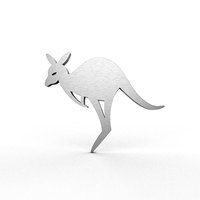
Icon Pins Kangaroo

Kangaroo

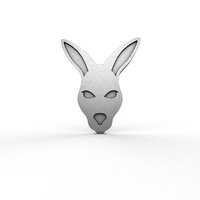
There are 63 species. The pin was modelled after the Red Kangaroo.

Icon Pins Kookaburra

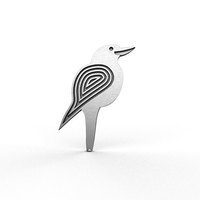
Kookaburra

Carnivourous member of the Kingfisher family. The Kookaburra's laugh is well known, often heard in old Tarzan movies.

Icon Pins Platypus

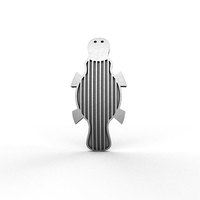
Platypus

Semi-aqatic mammal found in Eastern Australia, including Tasmania. This bizarre mammal is venomous, duck-billed, beaver-tailed, otter-footed and lays eggs!

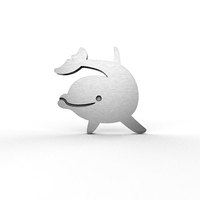
Icon Pins Dolphin

Dolphin

There are 33 different species around the world, the most common being the Bottlenose Dolphin. They are warm-blooded mammals which breath air. They can often be seen surfing the waves at local Sydney beaches.

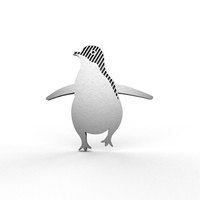
Icon Pins Fairy Penguin

Fairy Penguin

The Australian name for the "Little Penguin". It is the smallest species of penguin about 43 cm (16 in) tall. It is mainly found on the coastlines of southern Australia and New Zealand. Like most seabirds, they have a long lifespan. The average for the species is 6.5 years, but flipper ringing experiments have recorded individuals that have lived for over 20 years.

Icon Pins Humpback Whale

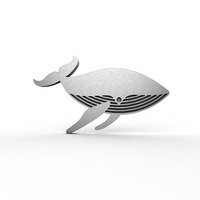
Humpback Whale

Approximately 3,000 will migrate each season between Antarctica and the Great Barrier Reef in Queensland.

Icon Pins Fruit Bat

Fruit Bat

The pin was modelled after the Grey-Headed Flying-Fox, thousands of which can be seen hanging from the trees in Sydney's Royal Botanic Gardens. It is a member of the Megabats of which there are about 170 species globally. These larger bats feed on nectar, pollen and fruit.

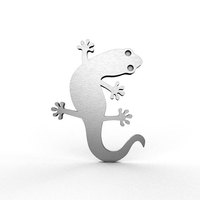
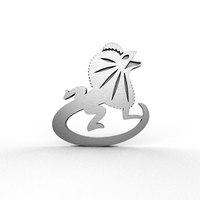
Icon Pins Gecko

Gecko

There are around 750 gecko species in the world with 91 Australian species. Geckos are found in a range of predominantly warm climatic conditions. Australian geckos are largely nocturnal, feeding on a wide variety of arthropods and termites with most activity occurring during the first few hours after sunset. They are capable of vocalisation in the form of a wheezing squeak or bark. Their name is a direct imitation of that sound.

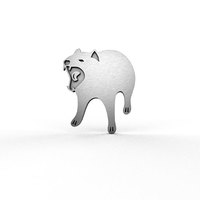
Icon Pins Tasmanian Devil

Tasmanian Devil

Its spine-chilling screeches, black colour, and reputed bad-temper, led the early European settlers to call it The Devil. Although only the size of a small dog, it can sound and look incredibly fierce. Devil Facial Tumour Disease (DFTD) is threatening its existence. As at December 2008, the DFTD had been confirmed at 64 different locations across more than 60% of Tasmania's mainland.

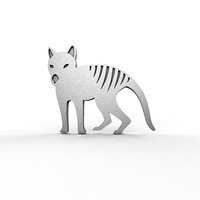
Icon Pins Tasmanian Tiger

Tasmanian Tiger

Now extinct, the thylacine was shy and secretive and always avoided contact with humans. Despite its common name, 'tiger' it had a quiet, nervous temperament compared to its little cousin, the Tasmanian devil. Captured animals generally gave up without a struggle, and many died suddenly, apparently from shock.

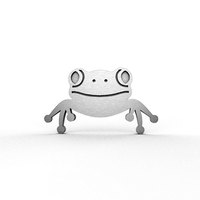
Icon Pins Tree Frog

Tree Frog

Found mainly in Queensland, it can reach 10 cm in length and can live up to 16 years in captivity. They are often found on windows or inside houses, eating insects drawn by the light.

Icon Pins Ulysses Butterfly

Ulysses Butterfly

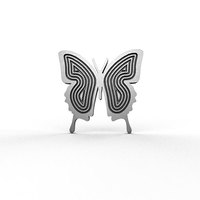
The Ulysses butterfly has a wingspan of about 14 cm. It lives in northeastern Australia along the coast of Queensland inhabiting tropical rainforest areas and suburban gardens. Males are strongly attracted to blue objects which they mistake for females.

Icon Pins Gum Leaf

Gum Leaf

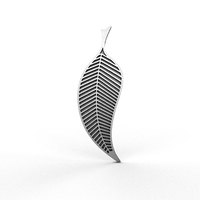
A common term for the Eucalyptus leaf. There are more than 700 species of Eucalyptus, mostly native to Australia, and a very small number are found in adjacent parts of New Guinea and Indonesia and one as far north as the Philippines. Only 15 species occur outside Australia, and only 9 do not occur in Australia.

Icon Pins G'day

G'day

Abbreviation for 'good day'. Used by locals as a greeting instead of 'hello'. Often used in phrases such as "G'day mate, how's it going?"

Icon Pins Thong

Thong (Flip Flop)

Many Australians wear them from birth to death. Most often seen at the beach but they can also be spotted at gala performances and exclusive restaurants!

Icon Pins Harbour Bridge

Sydney Harbour Bridge

Locally referred to as 'The Coathanger'. It is the world's widest long-span bridge and the tallest steel arch bridge.

Icon Pins Opera House

Sydney Opera House

Completed in 1973. It is now a UNESCO World Heritage Site. Designed by Danish architect Jørn Utzon.

Icon Pins Parliament House

Parliament House

Located in Canberra, the capital of Australia, it was opened on 9 May 1988 by Queen Elizabeth II. Its construction cost was over $1.1 billion. At the time of its construction it was the most expensive building in the Southern Hemisphere. Prior to 1988, the Parliament of Australia met in the Provisional Parliament House, which is now known as "Old Parliament House".

Icon Pins Parliament House

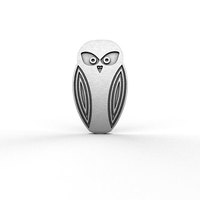
Boobook Owl

These are the smallest and most common owls in Australia. Like their other owl relatives, they feed on small mammals (like mice), small birds, frogs and lizards, but they also eat a lot of insects.

Icon Pins Parliament House

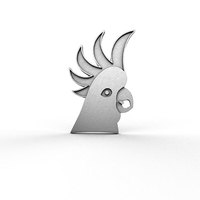
Cockatoo

The Sulphur-crested Cockatoo is a large white parrot. It has a dark grey-black bill, a distinctive sulphur-yellow crest and a yellow wash on the underside of the wings.

Icon Pins Parliament House

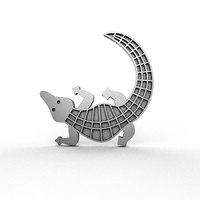
Crocodile

The Estuarine crocodile, while it can live in salt water, is able to go quite far up river into fresh water. It is one of the most dangerous of all the crocodile family, being the biggest and heaviest. It grows to between 4 and 7 metres long.

The Johnsons crocodile lives mostly in freshwater, but can also live in salt water. It grows up to 3 metres long. It is considered to be dangerous even though it is not known for attacking humans.

Icon Pins Parliament House

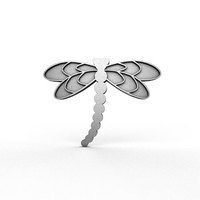
Dragon Fly

Living fossils, dragonflies are some of the most ancient of that ancient animal, the insect. Part of the order Odonata, which also includes damselflies, these unique fliers have been on Earth for around 300 million years.

Icon Pins Parliament House

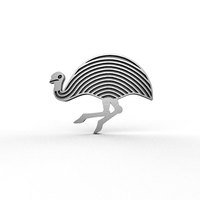
Emu

The emu is Australia's largest bird. It is part of a group of birds called ratites, which are big birds that do not fly. The other ratites are the ostrich from Africa and the rhea from South America.

Icon Pins Parliament House

Kangaroo

Kangaroo moves by hopping on its hind legs using its tail for steering and balancing while hopping at speed up to 40mph/60kmh. When kangaroo is moving slowly the tail is used as an extra leg and supports the kangaroo when it is standing on its hind legs. Most kangaroos can only move both back legs together and not one at a time.

Icon Pins Parliament House

Ned Kelley's Helmet

Ned Kelley, an Irish Australian bushranger, considered by some merely a cold-blooded killer, while others a folk hero and symbol of Irish Australian resistance against the oppression by the British ruling class for his defiance of the colonial authorities.

Icon Pins Parliament House

Seahorse

Rudie Kuiter in his book "Seahorses, pipefishes and their relatives" suggests there are more than 60 species of seahorse worldwide but the number is in debate. Some suggest the number is as few as 33. Australia has up to 25 species (Kuiter 2001) with new species still being identified from time to time.

Icon Pins Parliament House

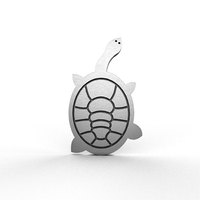
Long Neck Turtle

Long-necks are incredibly adaptable, and can be found paddling leisurely along most of Australia's eastern rivers, as well as in many lakes and human-made reservoirs. Thanks to a bag of turtle tricks, they can survive in a wide range of climates, from areas like Cooma, NSW, where air temperatures plunge below zero, to the western Queensland town of Alpha, where summer temperatures shoot up above 40 degrees.


Purchase

Pins: $AUD 20

    View your cart.