Corporate Merchandise

Corporate and promotional merchandise is a speciality of Allegria Designs. We will meet your requirements through strong local and offshore manufacturing facilities.

We use the latest computer aided design and manufacturing (CAD/CAM) techniques to create advanced 3D virtual models. Designs can be visualised on screen and in print before any manufacturing commences. Concepts can be approved before prototypes are produced thus saving costs.

We can supply pins, badges, rings, medallions, pendants, cufflinks and other items customised to your needs.

Most of our product is designed and made in Australia however certain processes (e.g. cloisonne pins) can only be done offshore.

If you would like your product to have an edge and would like to speak directly to the designers, please consider us for your corporate merchandising requirements.

Example Custom Projects

Queensland Law Society Pins

Resin filled pewter pins that have been plated in silver and gold respectively. An optional clear epoxy top coat can also be applied.

Cooper's Ale Pin

This photorealistic CAD render was created for client approval prior to production. It has a domed relief rather than the conventional flat design common to many pins.

Custom Keyrings

Examples of custom zinc die cast keyrings. The finish can be a mixture of sandblasting and polishing. Die cast zinc, because of its strength is a better choice for keyrings rather than softer pewter.

Mount Annan Fridge Magnet

Cast pewter with an antique finish. A strong magnet turns this medallion into a fridge magnet.

Questacon Pin

This small natural pewter pin is filled with a translucent resin. The pin was packaged by mounting it on circular compressed foam and then placing it in a branded velvet pouch.

Humane Society Pin

This small ribbon pin was mounted on a branded card and used as a fund raiser.

Custom Cufflinks

The client wanted their logo design incorporated into a cufflink. The pantone colour was matched to the original artwork and the resin finish is based on imitation cloisonne.

Popular Corporate Pins

An economic and popular pin design is based around plated cast pewter with a resin infill and coated with a transparent epoxy resin.

Stainless Steel Bookmark

Computer render of a bookmark proposal. The material proposed was thin stainless steel.

Admission Ticket

This admission ticket was engraved with individual seat numbering. It is an ideal keepsake after a major event.

PVC Keyrings

These are ideal for inexpensive, high volume promotional givaways.

Award Medals

Award medals (stamped) with bronze, silver and gold plating finishes. We can also provide the ribbons and a suitable box.

RSPCA Medallions

A set of pewter medallions for the RSPCA. The medallions were created from hand drawn sketches provided by the customer. Each medallion was individually numbered.

Bitton Bookmark

The stainless steel bookmark was designed for a chef. Cooking books and stainless steel are always found in the kitchen so this was an appropriate promotional givaway.

Lapel Pins

Sculptured pewter pin with antique copper finish and nickel with transparent resin finish.

Norths Pin

Silver plated pewter pin for Norths Leagues Club. A custom printed card was produced as well.

Minus 5 Club Pin

CAD render of a pin proposal.

Minus 5 Club Pin

CAD render of a pin proposal.

3D Hat Pin

Example of different plating finishes for a pewter hat that was created for a client.

Plating Finishes

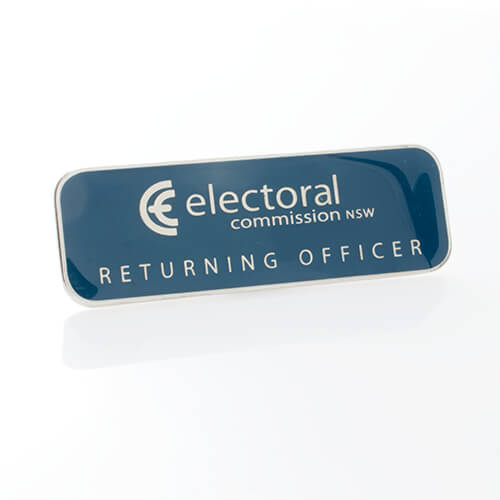
Bright and antique plating finishes (copper, nickel, gold) for a pin created for the NSW Electoral Commission.

Brisingr Medallion

A computer render of the finished medallion prior to manufacturing. See the case study below for more information on how this medallion was made.

Custom Cufflink

The client's logo was turned into cufflinks. The infill is laser cut coloured Paua shell.

Australian Paralympic Committee

Sterling silver rings were supplied to the Australian Paralympic Team during the Sydney Olympics. The 18ct gold medallion has been used as a Hall of Fame award.

Cloisonne Pin Overprint

The tiger's head is an overprint on a cloisonne pin base. It was not possible to reproduce the tiger's head in enamel because of the fine detail.

Printed Pins

An inexpensive solution using a print on stainless steel. An epoxy top coat is optional.

Enamel Pin

Example of a regular enamel pin. The metal is stamped or photoeteched. Colour infill is applied and then a coating of epoxy resin is added.

Epoxy Coated Name Badge

Examples of traditional resin coated, metal name badges. A small gemstone can be added for senior staff.

Cloisonne Pin

An example of a cloisonne pin. This technique is ideal where fine metal outlines act as perimeters for broader areas of enamel. The pins have a very smooth finish so an epoxy coating is generally not needed.

Custom Fitting

To create this custom sterling silver fitting, a 3D scan of the opal was made. The fitting was then built around the scan within a CAD program. This technology is similar to that found in the dental industry for creating custom crowns.

trademarks and copyrights are the property of their respective owners


Brisingr Medallion - Case Study

Brisingr Book

For the Australian release of Brisingr by Christopher Paolini, Random House Publishing launched a competition to win a gold medallion.

Brisingr Competition

The one-of-a-kind Brisingr 18ct gold medallion was worth $10,000. Officially endorsed by Christopher Paolini, the medallion featured a certified autograph by Paolini and an illustration by cover artist John Jude Palencar.

Computer Sculpt

Using the book cover as reference, the dragon was sculpted in CAD to create a relief that could then be added to the coin base.

Coin Render

A computer render helped visualise how the coin would look prior to manufacturing.

Wax Carving

Prior to casting the medallion was carved in wax using a milling machine.

Silver Rough Cast

The wax was then converted to metal using a technique called investment casting. The raw casting needs filing and polishing. This image is of the sterling silver medallion at an early filing stage.

Final Medallion

The silver casting was polished and then used as a pattern to create a rubber mold. From this mold, another cast was made in 18ct gold which was then polished to create this final piece.